
Fixing the heater you have
Fixing the heater makes sense if the tank itself is sound and a single part has failed. After looking it over, the plumber you hire can say whether a repair or a replacement is the better route.
Tanks that leak, heaters that only get lukewarm and units that have quit entirely all lead to the same decision, repair or replace. Call us, and we line up a free estimate with a local plumber, with tankless worth a look when you replace.
The sections that follow cover your repair and replacement choices, who may do the swap and when a permit comes into it, and how to size and date a heater with the tools.
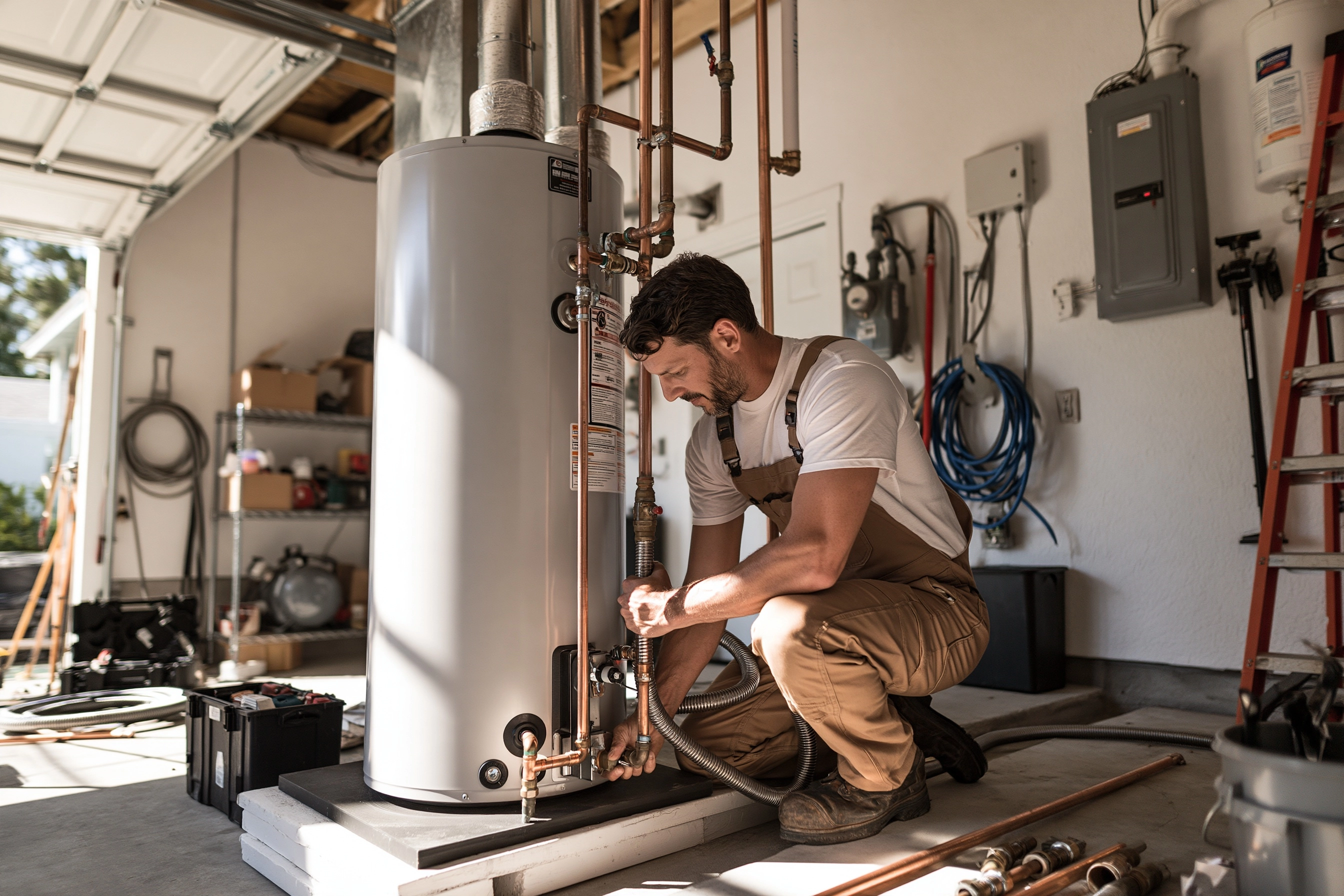
Fixing the heater makes sense if the tank itself is sound and a single part has failed. After looking it over, the plumber you hire can say whether a repair or a replacement is the better route.
A like-for-like swap keeps the fuel, the location and the piping as they are. The permit section below explains how the state treats that case.
A tankless unit heats water as you use it, so it is sized by flow instead of tank volume. Going from a tank to tankless can change the venting or the piping, and the plumber confirms what the house needs.
Tankless units carry a serial number on the label too, and the decoder below turns it into a build year. For work on the unit itself, call and a plumber looks at it.
Installing or replacing a water heater is named as plumbing work in North Carolina’s plumbing license law, which covers anyone in the business of plumbing.
The State Board of Examiners of Plumbing, Heating and Fire Sprinkler Contractors also issues a limited license just for replacing a water heater in a single-family detached home in the same location. To confirm that a plumber holds a current license of any kind, use the Verify License Search the Board runs, by license number, company name or personal name.
Before a heater is swapped, check with the Town on whether a permit is needed. The state allows a single exception for a one- or two-family home. A replacement water heater can be connected without a permit when a plumber licensed under North Carolina General Statutes 87-21 does the work and checks it, leak-tests any gas piping, and nothing changes in fuel, energy source, location, capacity, or the routing and sizing of venting and piping.
Installing, extending or generally repairing a plumbing system needs the permits the State Building Code requires, and a change in any of those items falls outside the carve-out.
For a tank, the number that matters is the first-hour rating, the hot water the heater can supply in one busy hour. The water heater size calculator takes your household size and overlapping hot-water uses and returns it.
Tankless sizing works differently, with flow and incoming water temperature deciding the class. The tankless flow calculator asks which showers and fixtures run together and applies Mooresville’s winter water temperature to give the class of unit.
The serial number decoder reads the label number on a heater and gives back its year and age. The year the heater was made is encoded in that number, and the age is useful when you are choosing between repair and replacement.
The leak detection page covers tracing a leak, which a wet floor near the heater may turn out to be. Supply pipes sit on the repiping page, and you will find every other service on the homepage.
Call us to discuss your current issue and how we can assist you. The call is free and you get a free, personalized estimate with no obligation. We're here to help.
Call (855) 321-3426